Elfland Nursery
Caesalpinia pulcherrima (red bird of paradise) - Available in November 2026
Caesalpinia pulcherrima (red bird of paradise) - Available in November 2026
Couldn't load pickup availability
2026 Harvest Pre-Order: We expect to harvest this seed crop in September–October 2026. Due to exceptionally strong demand this season, we are accepting pre-orders to help ensure availability. Orders will be fulfilled in the order they are received once harvesting and processing are complete.
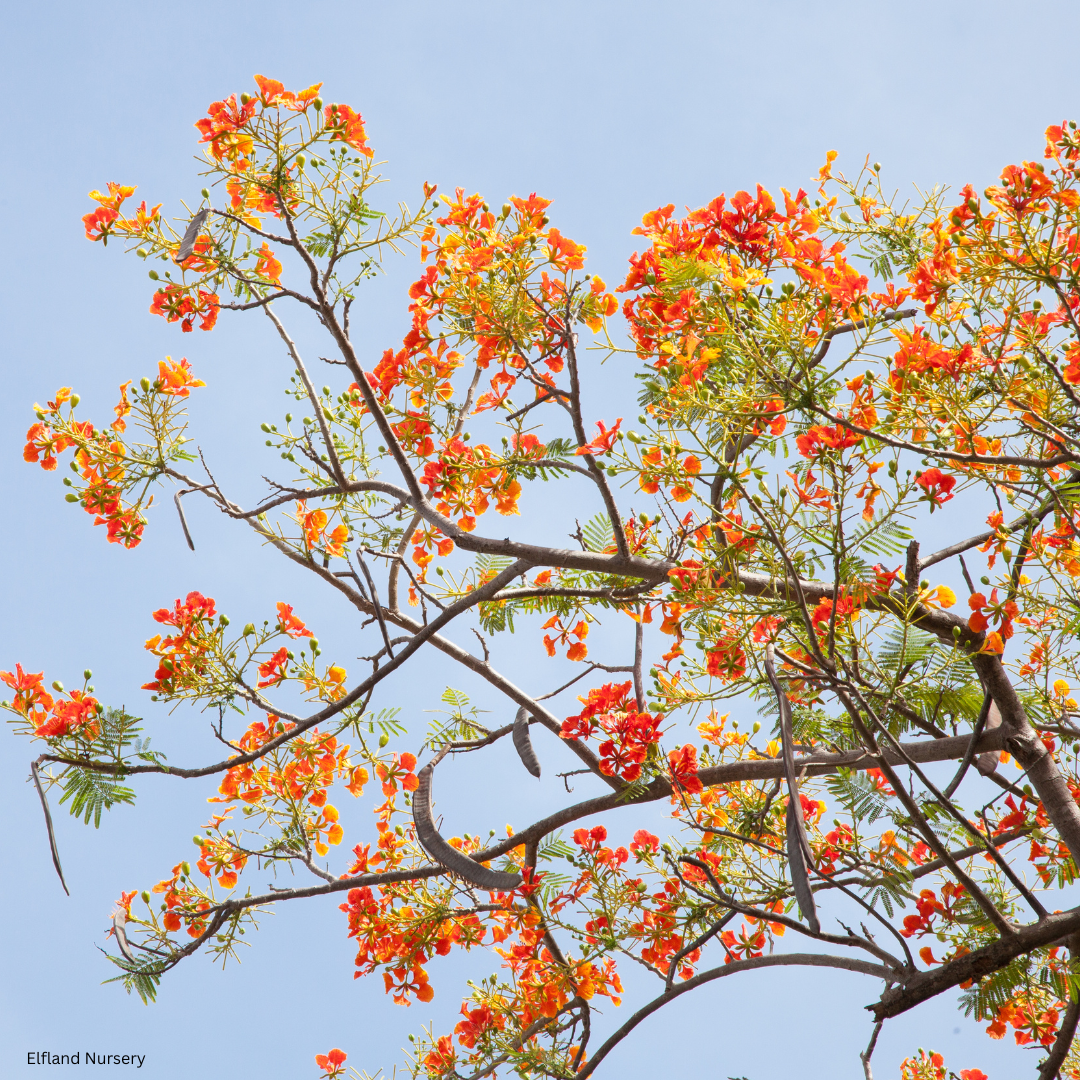
Caesalpinia pulcherrima, commonly known as Red Bird of Paradise, is a spectacular flowering shrub or small tree valued for its vibrant red, orange, and yellow blooms and finely textured fern-like foliage. Widely grown throughout tropical and subtropical regions, this species is prized for its extended flowering season, heat tolerance, and exceptional ornamental value.
Its striking flowers attract pollinators and create dramatic seasonal color in landscapes. Combined with its rapid growth and drought tolerance, Red Bird of Paradise has become a popular choice for residential landscapes, public plantings, and water-wise gardens.
This listing is intended for professional growers and customers seeking dependable propagation material.
Key Specifications
• Botanical Name: Caesalpinia pulcherrima
• Common Names: Red Bird of Paradise, Pride of Barbados, Peacock Flower, Dwarf Poinciana
• Quantity: 1,000 seeds
• Seed Count per lb: Approx. 8,000–15,000 seeds (estimate; varies by lot)
• Native Region: Tropical Americas (widely cultivated worldwide)
• Plant Type: Evergreen to semi-deciduous flowering shrub or small tree
• Mature Height: Typically 8–15 feet (2.5–4.5 meters)
• Mature Width: Typically 6–12 feet (2–4 meters)
• Growth Rate: Fast
• Hardiness: USDA Zones 9–11
• Light Requirements: Full sun
Cultivation and Use
Caesalpinia pulcherrima is widely grown for ornamental landscaping, xeriscaping, pollinator gardens, and tropical-themed plantings. It performs best in full sun and well-draining soils and develops excellent drought tolerance once established.
This species flowers heavily during warm weather and responds well to pruning, making it suitable for hedges, specimen plantings, and large-scale landscape installations. Its vivid blooms and adaptability make it a dependable choice for both commercial growers and landscape professionals.
Share