ElfLand Nursery
Chondropetalum tectorum (Elegia tectorum, Cape Rush) - 1000 Seeds - Bulk
Chondropetalum tectorum (Elegia tectorum, Cape Rush) - 1000 Seeds - Bulk
Couldn't load pickup availability
Chondropetalum tectorum, now often classified as Elegia tectorum and commonly known as Cape Rush or Bamboo Rush, is a distinctive evergreen reed-like species native to the fynbos region of South Africa. Valued for its upright architectural form and fine texture, it has become a popular choice for modern landscapes, restoration projects, bioswales, and water-wise gardens.
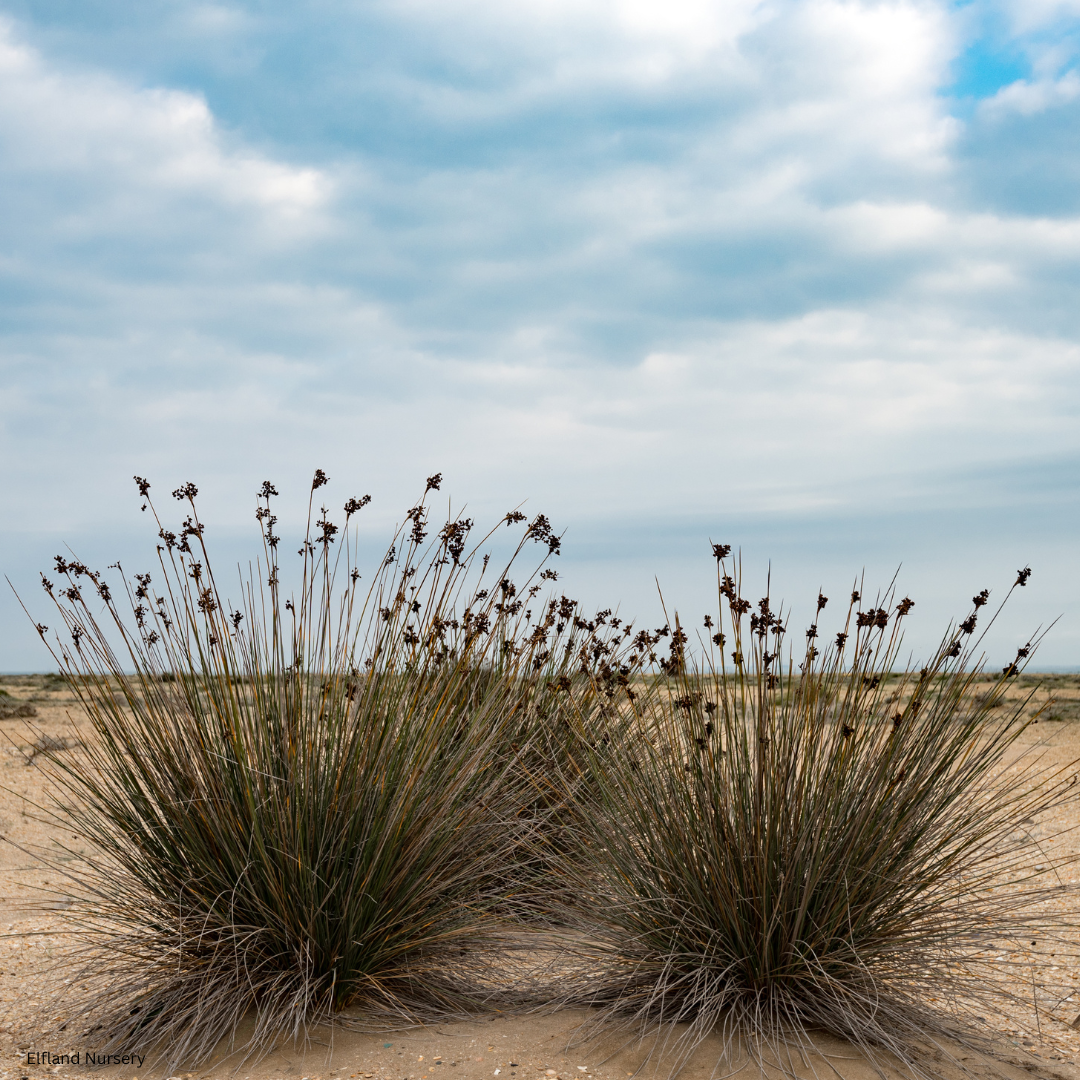
This attractive species forms dense clumps of upright green stems topped with decorative brown bracts that provide year-round interest and movement in the landscape. Its clean appearance and adaptability have made it a favorite among landscape architects and specialty growers.
This listing is intended for professional growers and customers seeking dependable propagation material.
Key Specifications
• Botanical Name: Chondropetalum tectorum
• Accepted Botanical Name: Elegia tectorum
• Common Names: Cape Rush, Bamboo Rush
• Quantity: 1,000 seeds
• Native Region: Western Cape, South Africa
• Plant Type: Evergreen reed-like perennial
• Mature Height: Typically 4–8 feet (1.2–2.5 meters)
• Mature Width: Typically 3–6 feet (1–2 meters)
• Growth Rate: Moderate
• Hardiness: USDA Zones 8–11
• Light Requirements: Full sun
Cultivation and Use
Chondropetalum tectorum is widely grown for ornamental landscaping, ecological restoration, bioswales, rain gardens, and naturalistic planting schemes. It performs best in full sun and well-draining soils and is especially well adapted to Mediterranean-type climates.
For best germination results use a smoke treatment or smoke-infused water, as numerous South African fynbos species respond positively to compounds found in natural wildfire smoke.
This species is particularly valued for its strong vertical form, low maintenance requirements, and ability to add texture and movement to the landscape. It is commonly used around ponds, drainage features, coastal plantings, and contemporary garden designs where its architectural character can be fully appreciated.
Share