Elfland Nursery
Dichrostachys cinerea (Sickle Bush, Chinese Lantern Tree) - 1000 Seeds - Bulk
Dichrostachys cinerea (Sickle Bush, Chinese Lantern Tree) - 1000 Seeds - Bulk
Couldn't load pickup availability
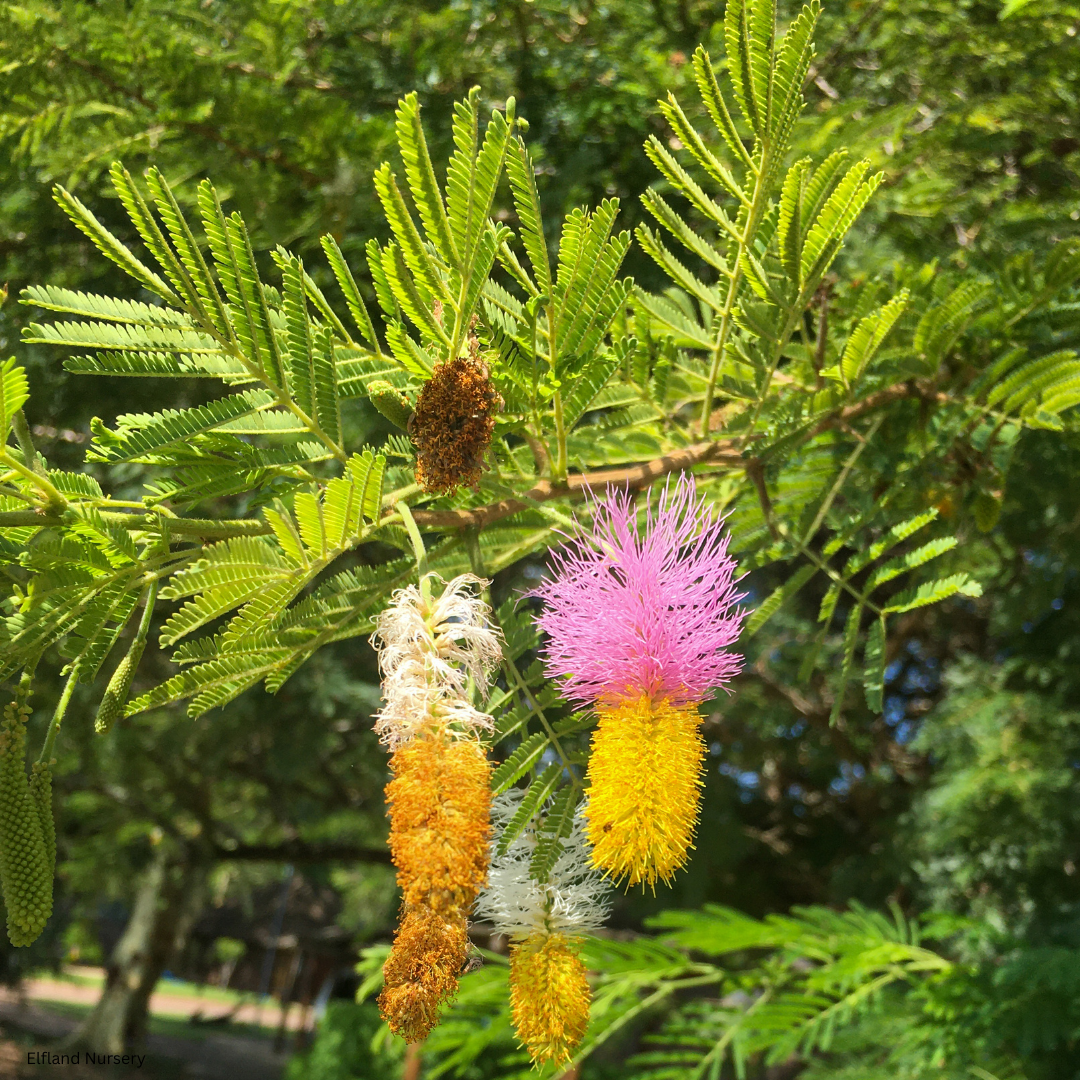
Dichrostachys cinerea is a distinctive flowering tree or large shrub native to Africa, the Indian subcontinent, and parts of Southeast Asia. Commonly known as Sickle Bush or Chinese Lantern Tree, this species is best known for its unusual two-colored flowers, which resemble small Chinese lanterns hanging from the branches.
The upper portion of each flower spike is lavender to pink, while the lower portion is yellow, creating one of the most unique floral displays among ornamental trees. In addition to its ornamental value, the species is appreciated for its drought tolerance, adaptability, and ability to thrive in challenging growing conditions.
This listing is intended for professional growers and customers seeking dependable propagation material.
Key Specifications
• Botanical Name: Dichrostachys cinerea
• Common Names: Sickle Bush, Chinese Lantern Tree, Bell Mimosa
• Quantity: 1,000 seeds
• Seed Count per lb: Approx. 8,000–15,000 seeds (estimate; varies by lot)
• Native Region: Africa, India, and Southeast Asia
• Plant Type: Deciduous to semi-evergreen shrub or small tree
• Mature Height: Typically 10–25 feet (3–8 meters)
• Mature Width: Typically 10–20 feet (3–6 meters)
• Growth Rate: Moderate to fast
• Hardiness: USDA Zones 9–11
• Light Requirements: Full sun
Cultivation and Use
Dichrostachys cinerea is widely grown as an ornamental flowering tree, specimen plant, wildlife-supporting species, and drought-tolerant landscape plant. It performs best in full sun and well-draining soils and develops excellent heat and drought tolerance once established.
The seeds possess a hard seed coat and generally benefit from scarification or soaking in hot water prior to sowing to improve germination. This simple pretreatment helps increase germination rates and promote more uniform seedling emergence.
Its unusual bicolor flowers, adaptability, and resilience make it a valuable choice for specialty nursery production, botanical collections, and warm-climate landscapes.
Share