ElfLand Nursery
Encephalartos horridus (Eastern Cape Blue Cycad) - 10 Seeds - 2026 Harvest
Encephalartos horridus (Eastern Cape Blue Cycad) - 10 Seeds - 2026 Harvest
Couldn't load pickup availability
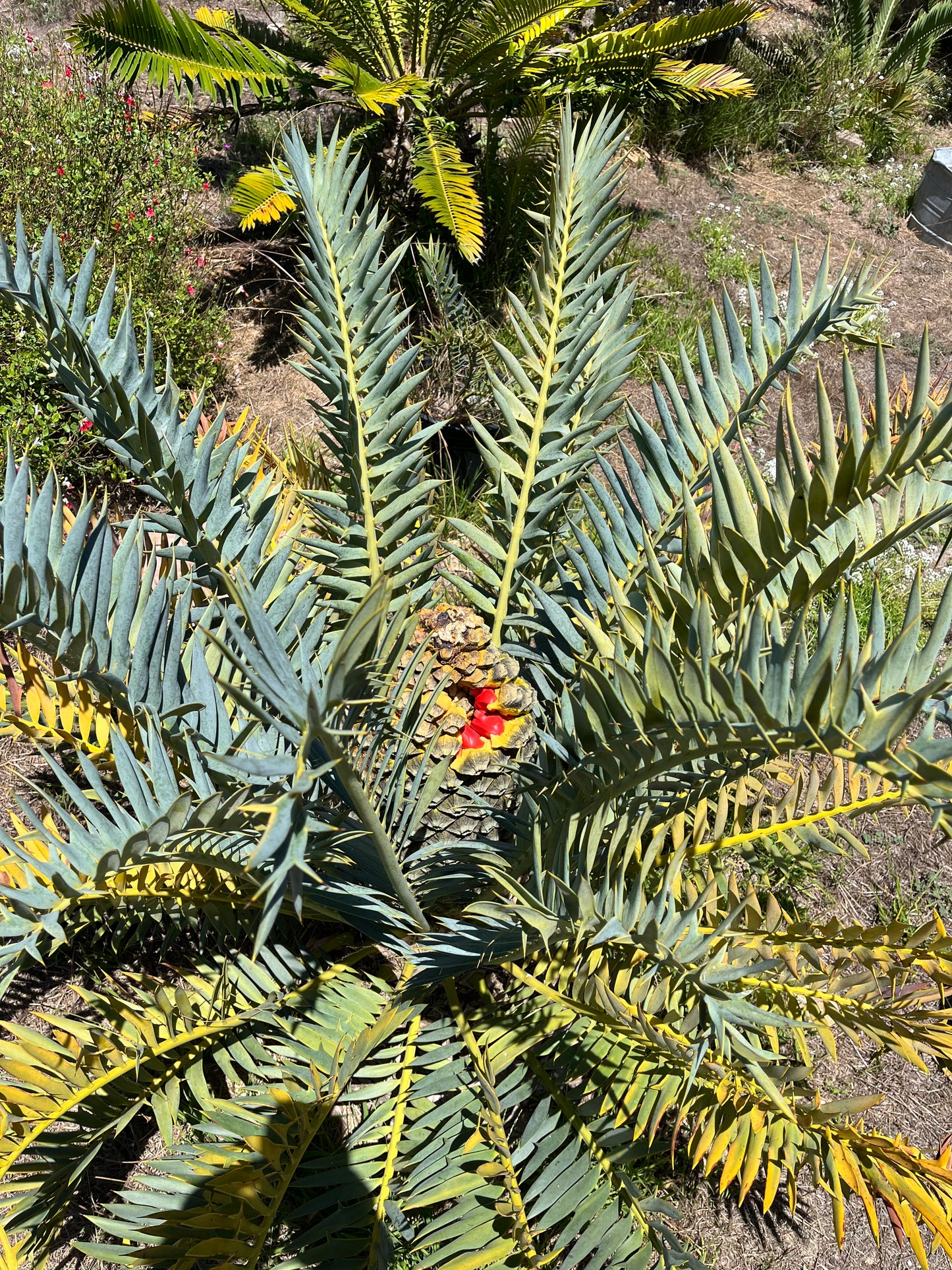
Encephalartos horridus, commonly known as the Eastern Cape Blue Cycad or Ferocious Blue Cycad, is one of the most spectacular and highly sought-after cycad species in cultivation. Native to the Eastern Cape of South Africa, this rare species is renowned for its intensely silvery-blue foliage with deeply divided, rigid leaflets that give the plant a dramatic architectural appearance.
Highly prized by collectors, botanical gardens, and specialty growers, Encephalartos horridus is considered one of the most ornamental cycads in the world. Its exceptional blue coloration, compact growth habit, and remarkable longevity make it a centerpiece in high-end landscapes and private collections.
This listing is intended for professional growers and customers seeking dependable propagation material.
Key Specifications
• Botanical Name: Encephalartos horridus
• Common Names: Eastern Cape Blue Cycad, Ferocious Blue Cycad
• Seed Count per lb: Approx. 70–120 seeds (estimate; varies by lot)
• Native Region: Eastern Cape, South Africa
• Plant Type: Evergreen cycad
• Mature Height: Typically 3–6 feet (1–2 meters) including crown
• Mature Width: Typically 5–8 feet (1.5–2.5 meters)
• Growth Rate: Slow
• Hardiness: USDA Zones 9–11
• Light Requirements: Full sun to partial shade
Cultivation and Use
Encephalartos horridus is widely grown for collector gardens, botanical collections, specialty nursery production, and premium landscape installations. It performs best in exceptionally well-draining soils and benefits from warm temperatures and excellent air circulation.
Seeds should be sown in a well-draining growing medium and kept consistently warm and lightly moist during germination. Like many cycads, germination can be slow and may occur over an extended period, requiring patience and consistent growing conditions.
Its extraordinary blue foliage, sculptural form, and exceptional rarity make this species one of the most desirable cycads in cultivation. Mature specimens are highly valued by collectors and serve as striking focal points in botanical gardens, specialty collections, and Mediterranean-style landscapes.
Share