ElfLand Nursery
Butia odorata ‘Blue’ (Blue Pindo Palm) - 100 Seeds - Bulk
Butia odorata ‘Blue’ (Blue Pindo Palm) - 100 Seeds - Bulk
Couldn't load pickup availability
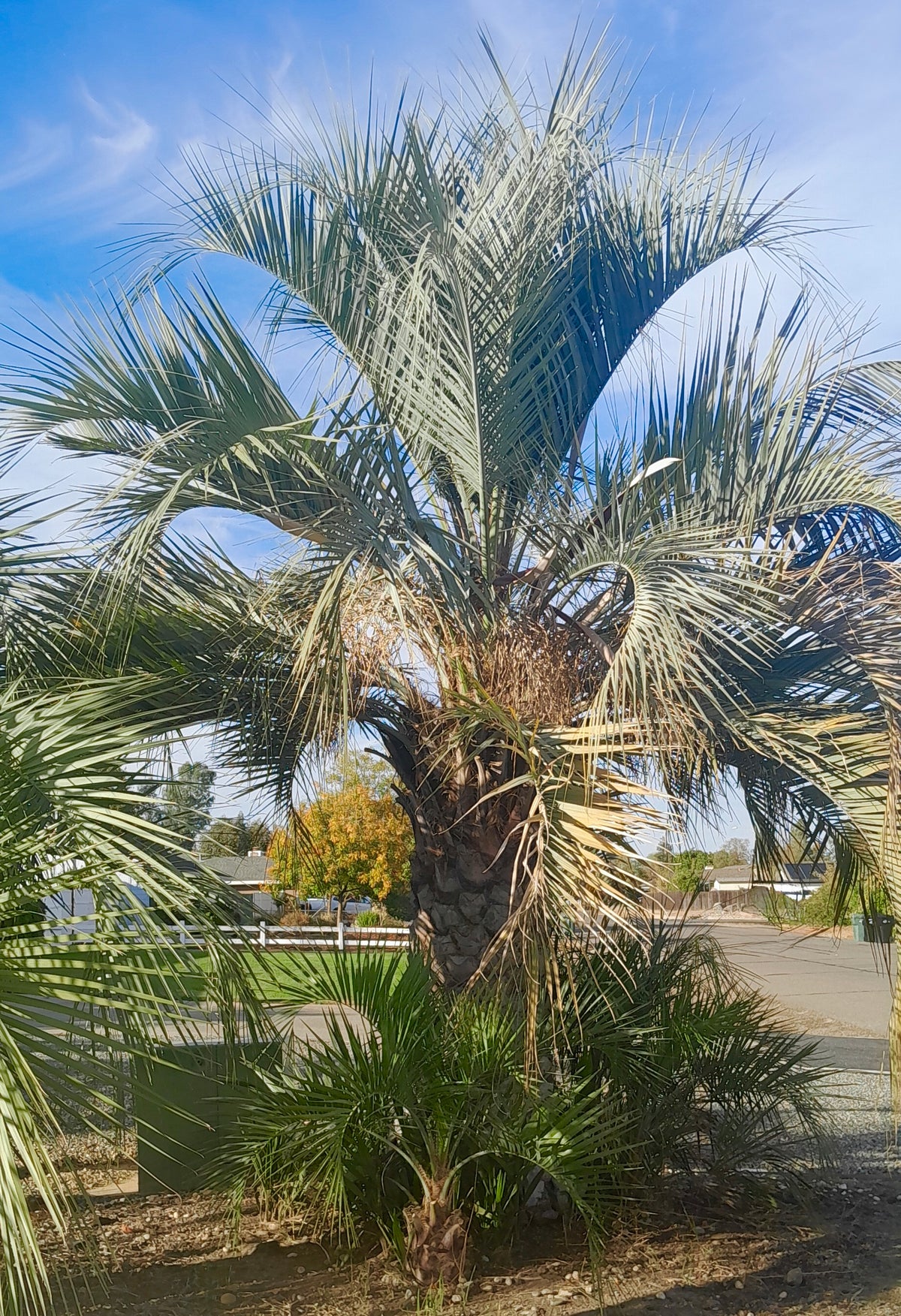
Butia odorata ‘Blue’ is a distinctive blue-foliaged form of the Pindo Palm, also commonly known as Jelly Palm. It is prized for its gracefully arching feather-like leaves and attractive blue-gray to silvery foliage.
Native to southern Brazil and Uruguay, Butia odorata develops a solitary, sturdy trunk topped by a dense crown of strongly recurving pinnate leaves. Blue selections are particularly sought after by palm collectors and landscape growers for their pronounced cool-toned foliage and architectural appearance.
Butia odorata is also notable for being one of the more cold-hardy feather palms. Established plants are generally considered hardy to approximately 10°F under suitable conditions, making the species useful well beyond strictly tropical climates.
Mature palms produce clusters of yellow to orange fruit, giving rise to the common name Jelly Palm. The combination of blue-gray foliage, relatively compact mature size, cold tolerance, and drought tolerance once established makes this an especially versatile ornamental palm.
Because these are seed-grown plants from blue-form parent material, individual seedlings may naturally vary in foliage color and intensity. Some seedlings may develop stronger blue or silver coloration than others.
Key Specifications
• Botanical Name: Butia odorata
• Horticultural Form: ‘Blue’
• Common Names: Blue Pindo Palm, Blue Jelly Palm
• Species Common Names: Pindo Palm, Jelly Palm
• Family: Arecaceae
• Native Range: Southern Brazil and Uruguay
• Plant Type: Evergreen feather palm
• Growth Habit: Solitary, trunk-forming palm
• Mature Height: Typically approximately 15–25 feet
• Foliage: Arching pinnate leaves with blue-gray to silvery coloration in selected forms
• Cold Hardiness: USDA Zone 8A and warmer; established palms generally hardy to approximately 10°F under suitable conditions
• Light Requirements: Full sun to partial shade
• Water Requirements: Drought tolerant once established
• Fruit: Yellow to orange fruit on mature palms
• Landscape Use: Specimen plantings, palm collections, Mediterranean landscapes, subtropical gardens, and warm-temperate landscapes
Share