Elfland Nursery
Chilopsis linearis (Desert Willow) - 1000 Seeds - Bulk
Chilopsis linearis (Desert Willow) - 1000 Seeds - Bulk
Couldn't load pickup availability
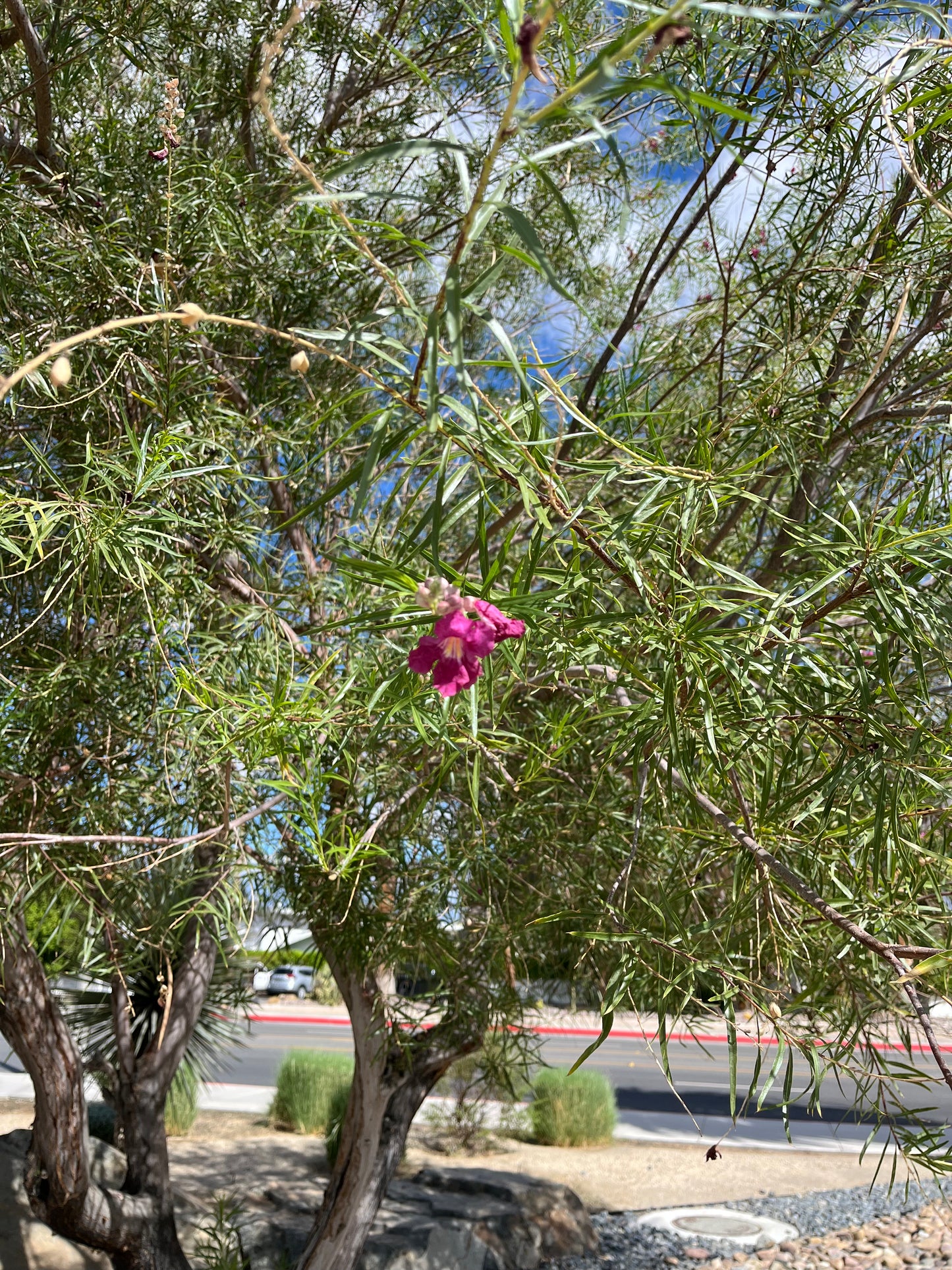
Chilopsis linearis, commonly known as Desert Willow, is a flowering small tree or large shrub native to the southwestern United States and northern Mexico. Despite its willow-like appearance and common name, Desert Willow is not a true willow and belongs to the Bignoniaceae family.
This attractive species produces narrow, graceful foliage and showy trumpet-shaped flowers, typically in shades of pink, lavender, and white. The flowers are attractive to hummingbirds and other pollinators and are produced during the warm growing season.
Desert Willow is particularly well adapted to hot, dry climates and is widely used in southwestern landscapes, xeriscapes, native gardens, and low-water plantings. Once established, plants are drought tolerant and develop an attractive, open growth habit.
Key Specifications
• Botanical Name: Chilopsis linearis
• Common Name: Desert Willow
• Family: Bignoniaceae
• Native Range: Southwestern United States and northern Mexico
• Plant Type: Deciduous small tree or large shrub
• Mature Height: Typically approximately 10–25 feet
• Flowers: Showy, trumpet-shaped flowers in pink, lavender, and white tones
• Foliage: Narrow, elongated, willow-like leaves
• Growth Habit: Upright to spreading, often multi-stemmed
• Light Requirements: Full sun
• Water Requirements: Low once established
• Landscape Use: Xeriscapes, desert landscapes, native gardens, flowering specimen plantings, and low-water landscapes
Germination & Cultivation
Seeds may be sown in a well-draining propagation medium and maintained under warm conditions with appropriate moisture during germination.
Good drainage and air circulation are important during seedling development. The growing medium should be kept appropriately moist without remaining continuously saturated.
As with all seed-grown plants, germination performance and timing can vary depending on seed handling, environmental conditions, propagation methods, and other growing factors.
Once established, Chilopsis linearis is well adapted to warm, dry climates and makes an attractive flowering specimen for landscape and nursery production.
Share