ElfLand Nursery
Cycas revoluta (Sago Palm, King Sago Palm) - 1000 Seeds - Bulk
Cycas revoluta (Sago Palm, King Sago Palm) - 1000 Seeds - Bulk
Couldn't load pickup availability
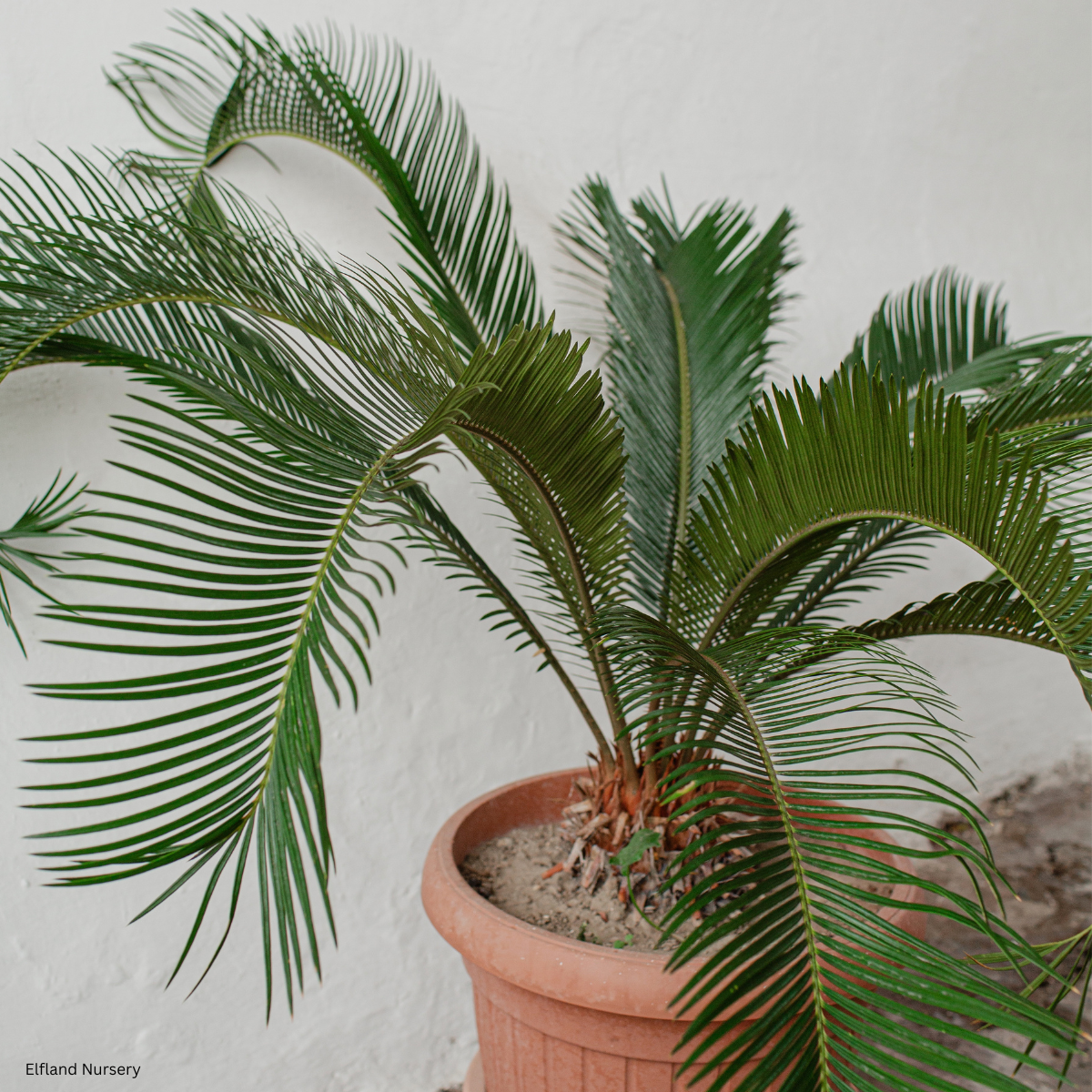
Cycas revoluta, commonly known as Sago Palm, King Sago Palm, or Japanese Sago Palm, is a distinctive evergreen cycad valued for its symmetrical form, deep green foliage, and architectural appearance. Despite its common name, it is not a true palm but belongs to the ancient Cycadaceae family.
Native to parts of eastern Asia, particularly southern Japan and the Ryukyu Islands, this ornamental species develops a stout trunk topped by a dense crown of stiff, glossy, feather-like leaves. Its slow-growing habit and striking appearance make it popular for subtropical landscapes, formal gardens, container growing, and specialty plant collections.
Sago Palm is widely cultivated in warm climates and is relatively cold tolerant compared with many tropical ornamentals. Established plants are best suited to USDA Zones 9–11, although freezing conditions can damage the foliage.
Its compact growth habit, distinctive evergreen foliage, and suitability for container cultivation make Cycas revoluta an established ornamental species for nurseries, landscape growers, and cycad collectors.
Key Specifications
• Botanical Name: Cycas revoluta
• Common Names: Sago Palm, King Sago Palm, Japanese Sago Palm
• Family: Cycadaceae
• Native Range: Eastern Asia, including southern Japan and the Ryukyu Islands
• Plant Type: Evergreen cycad
• Growth Habit: Slow-growing, trunk-forming cycad
• Foliage: Stiff, glossy dark green, pinnate leaves arranged in a symmetrical crown
• Cold Hardiness: USDA Zones 9–11; foliage may be damaged by frost
• Light Requirements: Full sun to partial shade
• Landscape Use: Specimen plantings, container growing, tropical and subtropical landscapes, formal gardens, and cycad collections
Important Safety Information: All parts of Cycas revoluta are poisonous if ingested, particularly the seeds. Keep seeds and plants away from children, pets, and livestock.
Share